
Projects are accelerating in Taiwan and Korea
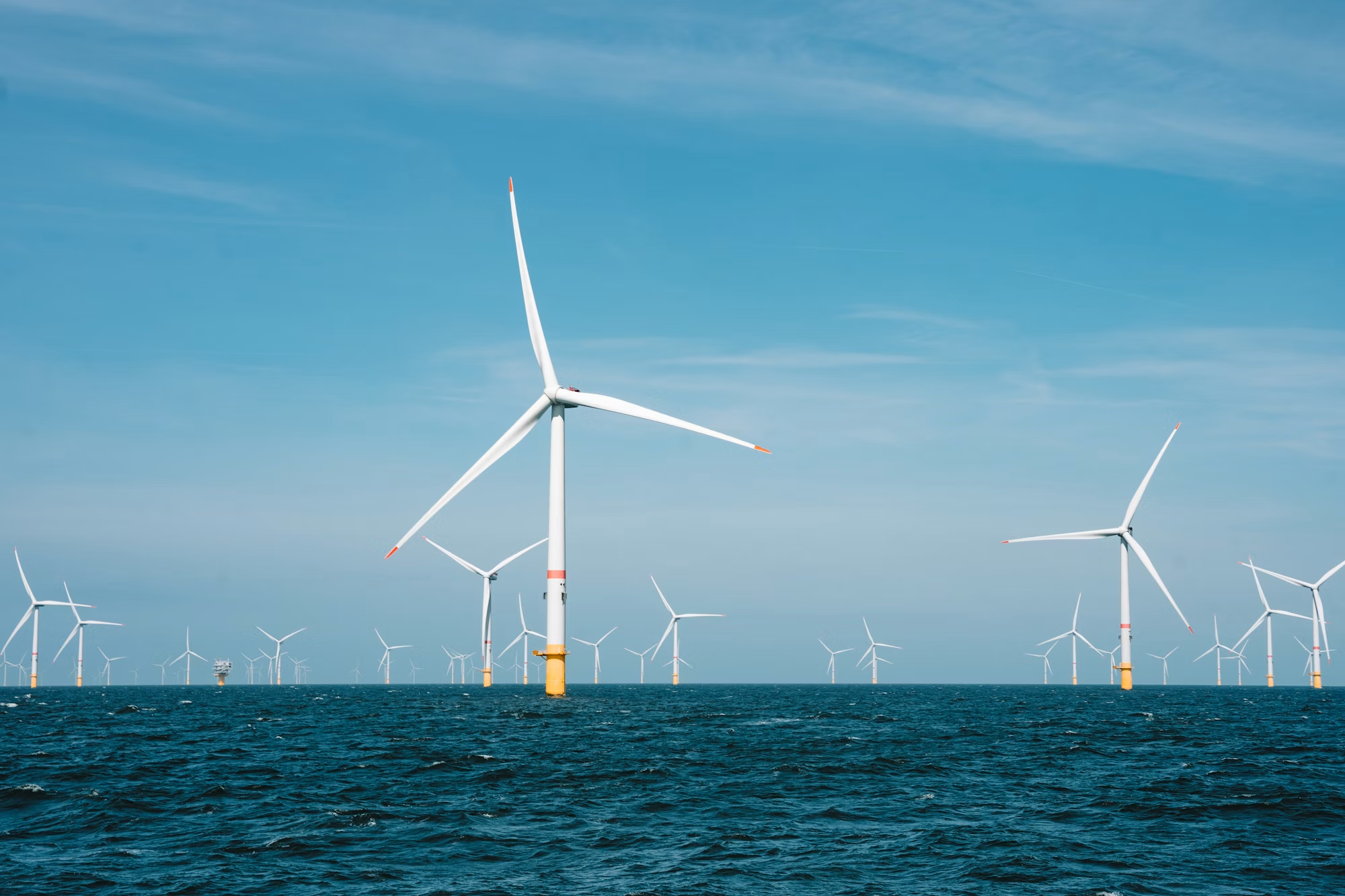
Taiwan's Changhua 2b and 4 wind farms, with 920 MW of combined capacity and more than $1 billion invested, are due to begin operating in 2026. Earlier phases have already supported an estimated 8,300 direct and indirect jobs.
The $6.9 billion Hai Long 2 and 3 project is expected to create more than 5,000 jobs over its lifecycle when it comes online in 2027. South Korea's 364.8 MW Yeonggwang Nakwol project and Japan's 220 MW Hibikinada project are also expected to begin operating in 2026.
Vietnam's project pipeline has moved back
Vietnam has postponed large-scale offshore wind deployment previously targeted at around 6 GW by 2030. The revised timeline now places those projects in the 2031 to 2035 period.
The delay affects more than generation capacity. It also postpones the projects that local training programmes, ports and supply chains need in order to develop practical experience.
One industry is creating two labour markets
Taiwanese and South Korean employers need turbine engineers, installation crews and grid-connection specialists now. Recruiters are looking to experienced offshore wind professionals from the United Kingdom, Denmark and Germany to help fill gaps.
Vietnam's emerging workforce faces the opposite problem: training capacity may develop before a reliable pipeline of projects exists. The contrast shows how policy timing directly shapes where renewable energy skills and jobs are created.
Sources:
Airswift — 10 offshore wind farm projects in Asia creating job opportunities — updated 4 February 2026
The Diplomat — Winds of Change: Can Taiwan's Offshore Wind Deliver Fair Work Too? — February 2026
Enerdata — Vietnam delays offshore wind projects to 2035 — 6 February 2025
Reccessary — Vietnam postpones 6 GW offshore wind goal — 10 February 2025