
A $21.4 billion transition with limited delivery
Three years after Indonesia agreed a $21.4 billion Just Energy Transition Partnership with wealthy nations, only around $1.1 billion of public money had been disbursed by early 2025. Decarbonising the country's electricity system is estimated to require roughly $97 billion by 2030.
Only 2.6% of the pledged finance is structured as grants. Most of the package consists of commercially priced loans that Indonesia must repay.
Coal closures are falling behind schedule
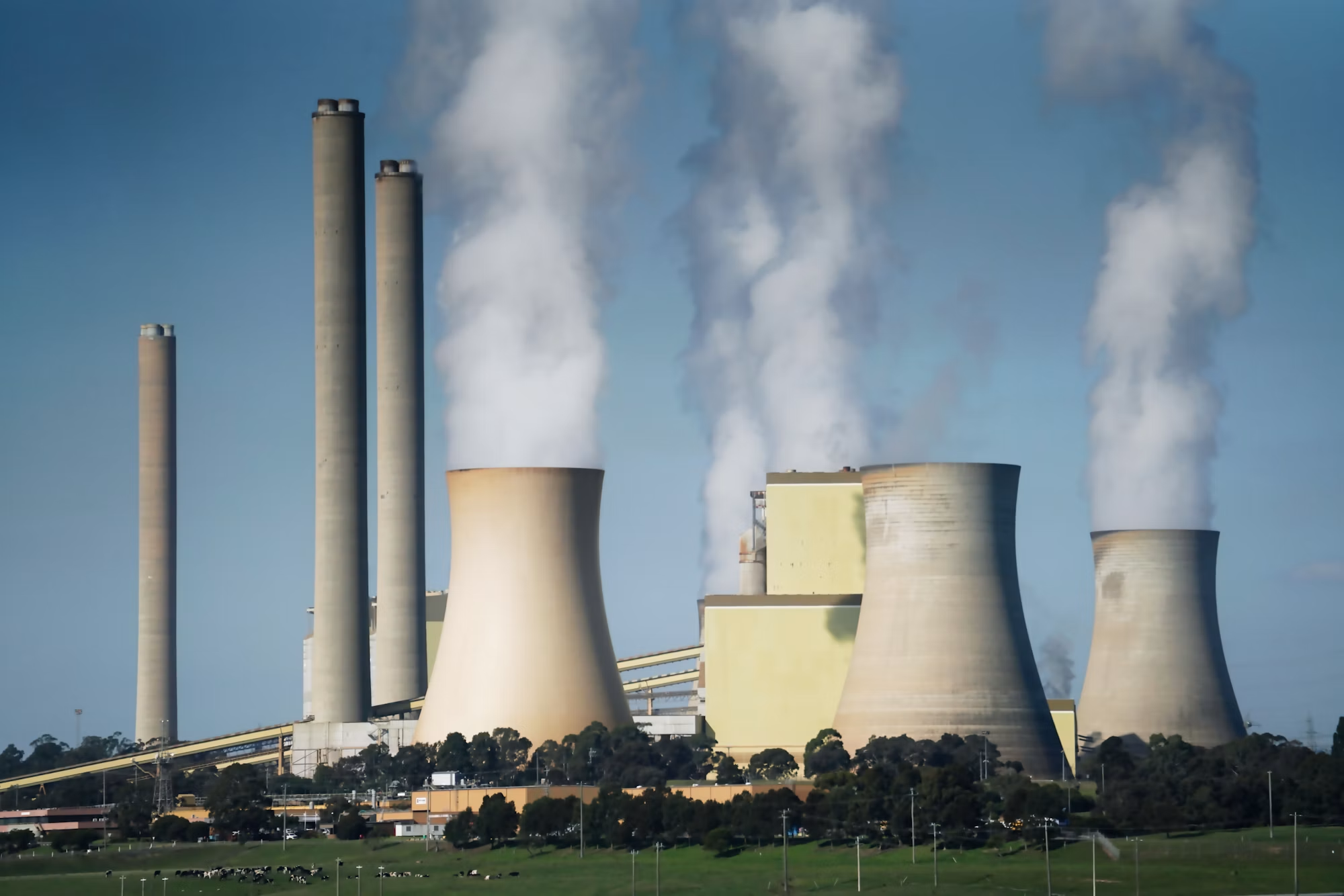
In December 2025, the government abandoned plans to close the Cirebon-1 coal plant, previously presented as the partnership's flagship early-retirement project. No coal plant has yet been decommissioned through the programme.
Trade unions have warned that the financing model could raise costs for households without providing a credible transition for coal-dependent regions.
Workers face an uncertain transition
With projects delayed and most finance tied to loans, Indonesia still lacks a funded programme capable of retraining or redeploying coal-sector workers at scale.
A just transition requires more than an energy investment pipeline. It also needs practical support for regional economies, skills development and pathways into new employment before existing jobs disappear.
Sources:
Climate Change News — Indonesia's failing Just Energy Transition Partnership is a cautionary tale — 3 June 2026
Lowy Institute — One year into Indonesia and Vietnam's Just Energy Transition Partnerships — 6 February 2024